


Aplasta el día de las piernas con estos mejores entrenamientos para las piernas
Llegar al gimnasio es lo suficientemente difícil. ¿Tienes que pensar en crear un plan de entrenamiento equilibrado? Olvídese de ello.
No te preocupes. Estamos aquí para ayudar. Ya sea que seas nuevo en las visitas regulares al gimnasio, que trabajes para levantarte del sofá durante algunos paseos por semana, que intentes integrar el ejercicio físico en tu vida por primera vez o que comiences un viaje de entrenamiento serio, hay formas fáciles de comenzar para que tu viaje de entrenamiento físico sea sostenible, holístico y físicamente saludable.
En esta guía definitiva, desempacamos la parte del cuerpo que a menudo se olvida en entrenamientos específicos: ¡las piernas! ¿Es nuevo en el infame “día de las piernas”? Lo tenemos cubierto.
No comience su viaje de acondicionamiento físico solo. Encuentre un club cerca de usted para obtener apoyo y orientación experta cuando la necesite.
¿Qué son los entrenamientos para las piernas?
Como suena, los entrenamientos de las piernas son tiempo concentrado para trabajar en los músculos de las piernas. Si bien muchos tipos de entrenamientos pueden comprometer los músculos de las piernas, el “día de las piernas” se trata de tomarse el tiempo para dar algo de amor a las piernas y dejar que los otros músculos descansen y se recuperen. Este tipo de entrenamiento se concentra en gran medida en grupos musculares específicos, por lo que no debería ser una rutina diaria. Los expertos recomiendan concentrarse en el entrenamiento de las piernas no más de 2 o 3 veces por semana.
Los beneficios de los entrenamientos para las piernas
Al igual que con cualquier tipo de actividad física, los beneficios que obtendrá de los ejercicios para las piernas son numerosos, por decir lo menos.
Estos son algunos de nuestros beneficios favoritos de los ejercicios para la parte inferior del cuerpo en particular:
Reduce el dolor lumbar
Aumenta la fuerza del núcleo
Apoya la aptitud funcional general
Junto con los beneficios generales de acondicionamiento físico, como mejorar el estado de ánimo, aumentar los niveles de dopamina y mucho más, los días de pierna podrían convertirse en su rutina semanal favorita.
Diferentes tipos de entrenamiento de piernas
Como se mencionó, hay muchas maneras diferentes de activar los músculos de las piernas. No necesariamente necesita pasar 45 minutos probando máquinas nuevas en el gimnasio para obtener los beneficios que los entrenamientos para piernas tienen para ofrecer.
Tendemos a agrupar tipos de entrenamientos para las piernas en las siguientes tres categorías:
Cardio. La mayoría de los tipos de cardio incluyen movimientos que definitivamente califican como entrenamiento de piernas. La próxima vez que corra, camine, camine o se suba a la escalera, concéntrese en cómo esas piernas están ganando fuerza.
Máquinas de gimnasia. Intimidante para los nuevos usuarios del gimnasio, las máquinas para las piernas son la forma más eficiente de entrenar grupos musculares específicos (descritos en más detalle a continuación) si desea desarrollar fuerza en un área particular de la parte inferior del cuerpo. Afortunadamente, Planet Fitness tiene una solución para abrumar a los nuevos equipos. La mayoría de las máquinas en el club tienen un código QR para que los miembros lo escaneen para ver un tutorial en video. ¡O puede ver tutoriales en cualquier momento en la aplicación PF! Simplemente navegue hasta la pestaña Workouts, luego haga clic en la pestaña Tutoriales para desplazarse o buscar por nombre de equipo.
Ejercicios de peso corporal . Estos tipos de ejercicios no requieren ningún equipo adicional. La próxima vez que estés atraconando un poco de TV, intenta colocarte en un juego de 10 a 15 sentadillas, patas de becerro o pulmones durante esos descansos comerciales de 60 segundos.
Y ya sea que esté listo para comprometerse o no con los días quincenales de las piernas, es interesante aprender cómo los músculos de las piernas interactúan y apoyan al resto del cuerpo y su función. Nos lleva a...
Grupos musculares principales
¿Qué músculos se activan durante un entrenamiento de piernas? ¡Muchos diferentes, en realidad! De hecho, las piernas contienen tantos músculos que, a menos que usted sea un profesional médico, no son realmente necesarios para aprender individualmente. Es suficiente entender que cuatro grupos musculares principales se alojan debajo de la cintura.
Tiene:
Pegamentos: Ubicado en las nalgas. Fortalecer estos músculos es crucial para la extensión de la cadera, la rotación y la estabilización de la pelvis.
Cuádruples: Los cuádriceps son un grupo de cuatro músculos en la parte delantera del muslo que trabajan juntos para extender la rodilla y flexionar la cadera.
Hamstrings: Detrás de los cuádruples, tiene los isquiotibiales, que flexionan la rodilla y extienden la cadera.
Cavillos: Estos músculos en la parte posterior de la parte inferior de la pierna son responsables de apuntar el pie hacia abajo y ayudar a caminar y correr.
¿Listo para activar este conocimiento de las piernas? Pasemos a las máquinas del gimnasio para ver cómo se hace.
5 máquinas para piernas favoritas (y cómo usarlas)
Acercarse a los equipos del gimnasio, especialmente por primera vez, puede intimidar a muchos, incluso a los usuarios regulares del gimnasio. Por lo tanto, hemos desglosado nuestras cinco máquinas para piernas favoritas en Planet Fitness con algunas instrucciones simples sobre cómo integrarlas en su rutina de ejercicios semanal.
1. Máquina de cable
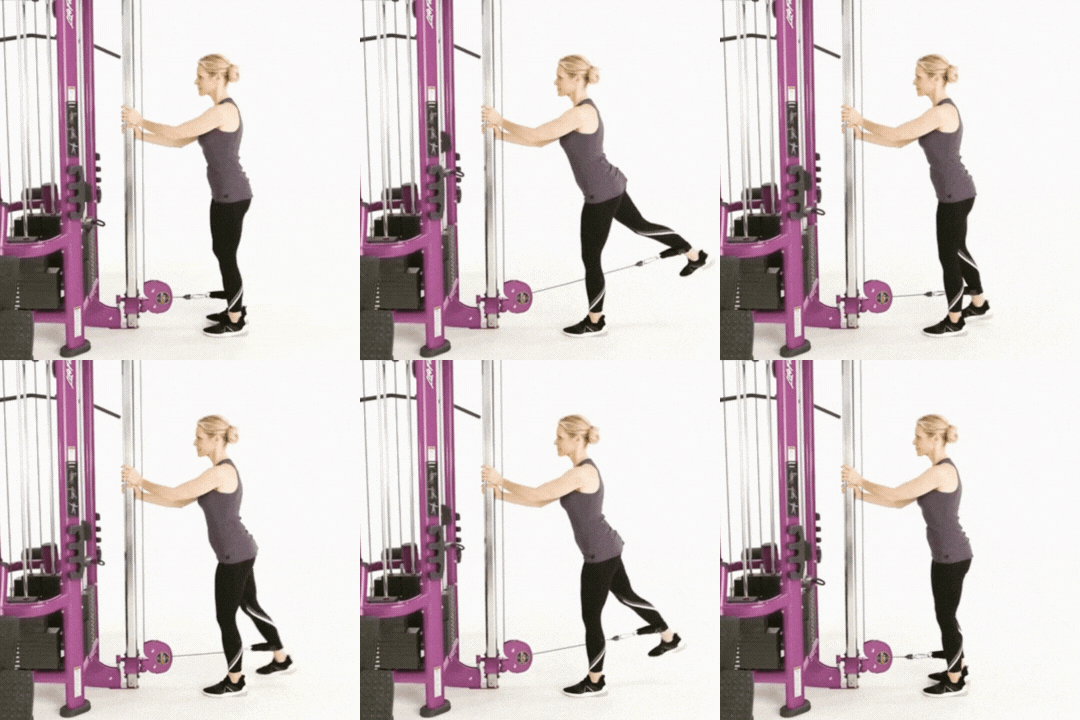
Esta máquina es un equipo versátil que utiliza poleas ajustables para proporcionar resistencia. Es maravilloso para los entrenamientos de las piernas, ya que le permite realizar una serie de ejercicios para dirigirse a diferentes músculos de las piernas ajustando ligeramente la máquina. Desde sentadillas de cable hasta extensiones de cadera de cable (como en el gif de ejemplo), ¡podría pasar todo el día con las piernas solo en esta máquina!
2. Máquina de extensión de piernas
La máquina de extensión de pierna aísla y se dirige a los cuádruples. Siéntese en la máquina, coloque la parte inferior de las piernas debajo de la barra acolchada y extienda las piernas contra la resistencia. ¡Sentirás que esos muslos comienzan a arder en poco tiempo!

3. Máquina de prensa de piernas lineal
Esta máquina proporciona soporte mientras replica un movimiento en cuclillas para dirigirse simultáneamente a los cuádriceps, isquiotibiales y glúteos. Sentado en el asiento, hará participar a todos esos grupos musculares para alejar una plataforma pesada de su cuerpo.

4. Máquina de pegamento
La máquina de glúteos, también conocida como máquina de empuje de cadera, se centra en trabajar los glúteos. Se sienta en el asiento y empuja los talones para levantar una plataforma pesada usando las caderas, enganchando y fortaleciendo los músculos de los glúteos.

5. Máquina de extensión de pantorrilla
Esta máquina, como su nombre lo sugiere, se dirige a los músculos de la pantorrilla. Siéntese en la máquina y use las pantorrillas para levantar una palanca pesada extendiendo los tobillos. Es una forma eficaz de trabajar en la fuerza y definición de la pantorrilla.

Aplasta tu próximo entrenamiento del día de la pierna
Los entrenamientos para las piernas ofrecen muchos beneficios, desde reducir el dolor lumbar hasta mejorar la fuerza central y apoyar el estado físico funcional general. Al involucrar a los músculos de las piernas en todo tipo de ejercicio, comprender los grupos musculares principales y adoptar el uso de algunas máquinas para las piernas en el gimnasio, tendrá el poder de hacer que el día de las piernas sea su nuevo día favorito de la semana, ya sea en el gimnasio o a través de la aplicación PF.
Temas Relacionados
Artículos relacionados
Consejos para principiantesGuía de ejercicios
What is Rucking? Key Benefits and Tips
Need a quick and efficient method to increase your level of fitness? Your new favorite workout could turn out to be Rucking!
Rucking combines walking with weight-bearing and can positively impact your strength, endurance, and cardiovascular health. This low-impact workout is perfect for anyone, of any fitness level, and has the advantage of supporting mental wellness and reducing stress. Prepare to learn more about what makes rucking such a fantastic and approachable workout—let's go!
Don’t start your fitness journey alone—Find a club near you and take that first step today!
What is Rucking?
Walking while carrying a weighted backpack is known as "rucking." Rucking increases the physical and mental benefits of hiking or walking by adding to the challenges of carrying weight. It originated in military training, where troops used rucking to increase their strength and stamina.
The accessibility of rucking is what makes it stand out. Anyone can ruck, regardless of fitness level, so you don't have to be an athlete to get started. Beginners may start light and slowly increase their weight and distance as stamina rises—it's an exercise that adapts to them.
The Benefits of Rucking
Rucking develops the body and the mind alongside physical conditioning. It builds both mental and physical strength by offering a balanced approach to health, uniting weight-bearing exercise with the outdoors.
Physical Benefits
Rucking is a full-body exercise with significant physical advantages. Rucking raises your heart rate, strengthens your heart and lungs, and, in turn, improves cardiovascular health. Over time, carrying weight improves stamina and increases overall strength and endurance—your legs, back, and core are strengthened.
Rucking also supports fat loss, as the extra weight increases metabolism and speeds up calorie expenditure. Balancing your body and reinforcing the muscles supporting your spine also fosters improved posture.
Mental Benefits
Rucking isn’t just beneficial for your body—it’s a powerful boost for your mind. Combining physical activity and being outdoors helps lower stress hormones, reduce anxiety, and promote relaxation. Rucking causes endorphins to be released, boosting mood and cognitive function leading to increased focus and mental clarity.
The weighted walking's rhythmic quality promotes concentration and focus, while the outside environment provides sunlight, fresh air, and a closer bond with nature, all raising your general sense of well-being.
What Equipment is Needed for a Rucking Workout?
Getting started with rucking doesn't require much equipment, but the right gear can make all the difference.
First, a sturdy, supportive pair of boots is required to prevent discomfort and injury, so look for footwear with a good fit, proper arch support, and sufficient cushioning for long walks. Next, a durable, comfortable backpack is another key item—opt for one with padded shoulder straps, a supportive waist belt, and enough room for your weights.
Beginners can also consider a weighted vest as an alternative. Start with a manageable weight, about 10 to 20% of your body weight, and gradually increase as your strength improves. Household items like books or water bottles can work as weights if needed. Other essentials for your workout can include a hydration pack or water bottle, moisture-wicking clothing for comfort, and a headlamp or flashlight for safe nighttime rucking.
How to Ruck
Rucking is a versatile activity that can be suited to fit your workout level and goals. Focusing on the right route, proper form, and a structured routine can help you maximize its benefits while staying safe and motivated.
Choosing a Route
Find a location that suits your fitness level and goals. Start with flat, even terrain, and gradually introduce more challenging routes with hills or uneven surfaces to increase intensity.
Proper Form and Technique
Maintaining good posture is crucial for preventing injuries. Keep your back straight, shoulders relaxed, and head aligned with your spine. Use a natural arm swing for balance, and focus on steady, rhythmic breathing to support your endurance.
Building a Rucking Routine
Start slow, with short distances and lighter weights, and gradually increase as you build strength and confidence. Too cold or hot to ruck outside? Hit the gym to keep endurance building. Whether you’re doing circuits or lifting weights to build strength, keep it engaging. Plus, a little extra cardio on the step machine or elliptical will help you build endurance, which goes a long way out on the open road.
Tips for Starting Your Rucking Workouts
Starting your rucking journey requires thoughtful preparation to warrant safety, benefits, and long-term success. Prioritizing hydration, safety measures, and progress tracking can help you build a routine supporting your goals and motivating you.
Hydration and Nutrition
Proper hydration and nutrition are essential for a successful rucking workout. Make sure to drink water before, during, and after your ruck workout to maintain performance. Combine your water regimen with nutrient-dense meals to improve your energy levels by nourishing your body and speeding up recovery.
Safety Considerations
Rucking with a buddy or in a group not only adds motivation, but also enhances safety. Always inform someone of your planned route and expected return time, especially if you’re rucking alone. Wear weather-appropriate gear, stay mindful of conditions, and take extra precautions when rucking in extreme heat or cold to avoid discomfort or injury.
Tracking Your Progress
Monitoring your progress is key to staying motivated and achieving your goals. Record your workouts and monitor your time, weight, or distance progress using fitness trackers, mobile apps, or notebooks.
Embrace the Outdoor Adventure Toward a Healthier You
Rucking is more than just a workout or fitness option—it's an adventure that combines mindfulness, community, and fitness. It's fun, relaxing, and beneficial for achieving many health goals, like improved mental health or strength and endurance.
Take to the trail today! Get started for free on the PF App—track your progress and connect with a supportive community.
Always consult with a physician prior to beginning any exercise program. See full medical disclaimer here.
Educación y ConsejoGuía de ejercicios
9 Best Dumbbell Tricep Exercises to Build Muscle
The biceps aren’t all that’s in the arms’ arsenal! Every well-rounded fitness routine includes tricep exercises. Just because many neglect this critical muscle in favor of the biceps doesn’t mean they don’t deserve some love, too!
Training the triceps helps with arm strength, definition, and upper-body stability. A great way to train this muscle is with classic dumbbells! The easy-to-use weights' versatility makes them great for beginners and pro-lifters alike.
Plus, the exercises in this guide are perfect whether you’re at home or your local gym, where you can find support and expert guidance if needed.
What are Triceps?
To target the triceps, you must first understand them. The triceps, or triceps brachii, are the muscles located on the back of the upper arm. The muscle is made up of three distinct “heads” called the long, lateral, and medial. So your upper arm is actually two-thirds tricep!
The triceps are crucial to movements like pushing and pressing, as well as responsible for extending the elbow joint. A variety of exercises will help build tricep strength, stabilizing the shoulder joint while reducing the risk of injury in daily activities and workouts. It’s a win-win!
Why Focus on Tricep Strength?
Developing strong triceps isn’t just about flexing those guns. The triceps are highly functional in daily activities, so training these muscles adds strength and upper-body power, enhances joint stability, and supports the rest of the body to perform better in general daily life.
Since the tricep is responsible for bending the elbow joint, any pushing or pulling motion is more accessible and less stressful on the body with stronger triceps. Strong triceps also allow for greater functional strength, translating to more manageable everyday tasks, from lifting objects overhead to pushing open heavy doors. Focusing on tricep strength will give you a stronger upper body to handle fitness and day-to-day challenges.
Best Dumbbell Tricep Exercises for Beginners
Unpack the following dumbbell exercises below that specifically target those tricky triceps. Beginners and experts alike should focus on form, technique, and gradual strength development.
1. Close-Grip Dumbbell Press
This exercise targets the triceps while engaging the chest and shoulders. It strengthens the inner triceps while defining your upper arms and chest.
Lie flat on a bench with a dumbbell in each hand.
Hold the weights close together at chest level.
Keep your palms facing each other and press the weights upwards.
Make sure your elbows stay tucked close to your body.
Pause briefly at the top and slowly lower the weights back down.
2. Dumbbell Skull Crusher
The Skull Crusher isolates the triceps. Feel the burn as your triceps are challenged through a full range of motion and grow your muscles.
Lie on a bench or floor.
Hold the dumbbells directly above you.
Lower the weights to your forehead by slowly bending your elbows.
Keep your upper arms stable–if you’re quivering, lower the weight.
When the dumbbells are at a comfortable point near your forehead, go back to starting position.
3. Dumbbell Floor Press
Since the floor press restricts the range of motion, this is an excellent exercise for beginners who still manage to target the triceps. With little shoulder engagement, your triceps are isolated, and you build functional strength.
Lie flat on the floor with a dumbbell in each hand.
Keep your elbows resting on the floor.
Press the weights straight up. Make sure your elbows are slightly tucked.
Lower the weights back down until your elbows touch the floor.
Repeat.
4. Triceps Kickback
Like the floor press, this exercise also isolates the triceps for muscle definition and endurance.
Stand with knees slightly bent and back straight.
Hold dumbbells by your sides with palms facing inward.
Hinge at the hips and extend your arms backward until fully extended.
Squeeze the triceps at the top before returning to the starting position.
5. Dumbbell Triceps Kickback (Alternative)
In any workout routine, it’s essential to include alternate methods to increase motivation and offer variety to keep life spicy. (Pssst…if you are struggling with motivation, here’s a little gymspiration.)
Plus, you can't target different areas of the muscle for further development. This kickback variation can include different grip positions (like a pronated or supinated grip) or a different stance (possibly a staggered stance or kneeling position) to add intensity and variety.
6. Dumbbell Triceps Extension
The Dumbbell Tricep Extension builds upper body balance and strength, promoting shoulder stability and core engagement. To give it a try, you’ll:
Sit or stand with a single dumbbell held overhead using both hands.
Lower the weight behind your head by bending at the elbows.
Extend your arms to return to the starting position.
7. Overhead Dumbbell Tricep Extension
Much like #5, this variation engages the core while still strengthening those triceps. First, you’ll:
Sit or stand with your core engaged.
Hold a dumbbell overhead.
Lower it behind your head.
Return to the starting position.
8. Dumbbell One-Arm Triceps Extension
Using one arm at a time, this tricep extension variation corrects any strength imbalances between arms and builds muscle in each tricep.
Hold a dumbbell in one hand with the arm extended overhead.
Lower the weight behind your head, bending only at the elbow.
Return to the starting position.
9. Lying Triceps Extension
This final exercise reduces shoulder strain, allowing for controlled isolation of the triceps. It’s especially suitable for beginners looking to build stability and strength without much shoulder involvement.
Lie on a bench with dumbbells extended toward the ceiling.
Slowly bend at the elbows to bring the weights down.
Extend back up to the starting position.
Tips for Dumbbell Tricep Training
To effectively train the triceps safely, there are certain measures necessary to maximize benefits. Remember: Anything worth doing is worth doing right!
So, keep the following in mind for worthwhile muscle training. For effective and safe tricep training, focus on controlled movements and proper form:
Form First: Prioritize correct form over heavy weights to prevent injury and maximize muscle engagement.
Start with Light Weights: Beginners should begin with lighter weights, allowing you to master the technique before progressing.
Gradual Weight Increase: Once your form is perfected, increase weights incrementally for sustainable strength gains.
Controlled Movements: Avoid using momentum; controlled, steady movements ensure your triceps work optimally.
Sample Beginner Dumbbell Tricep Workout
Incorporate 3-4 exercises into a routine to strengthen the triceps efficiently. Muscles strengthen most effectively through exercises that function together to target certain groups.
Here’s a quick beginner workout:
Close-Grip Dumbbell Press: 2-3 sets of 8-12 reps
Triceps Kickback: 2-3 sets of 10-12 reps
Dumbbell Skull Crusher: 2-3 sets of 8-12 reps
Overhead Dumbbell Tricep Extension: 2-3 sets of 10 reps
Take 30-45 seconds between each set to allow your muscles time to recover. And don’t forget to drink plenty of water!
Safety Tips for Working Triceps with Dumbbells
Big muscles are no good when you pull or strain yourself. We have your back for safe lifting!
Start with Light Weights: For beginners, starting with lighter weights is crucial to mastering proper form and avoiding unnecessary strain. Using manageable weights helps build a strong foundation while reducing the risk of injury. As you progress, gradually increase the weight to safely build muscle strength and endurance.
Maintain Proper Form: When working on tricep exercises, it’s essential to keep your elbows close to your body and avoid locking your joints, especially during extensions. Maintaining good form not only enhances muscle engagement but also prevents stress on the shoulders and elbows, reducing the chance of injury.
Control Your Movements: Rather than swinging or using momentum, focus on slow, controlled movements. This approach ensures that your triceps stay engaged throughout each repetition, minimizing the risk of strain. Controlled movements also enhance muscle isolation, leading to more effective workouts.
Warm Up and Stretch: Start with light cardio and dynamic stretching to prepare your muscles and joints for the workout. A thorough warm-up activates the triceps and surrounding muscles, improving flexibility and circulation, which helps prevent strain or injury during exercise.
Avoid Overextension: With exercises like skull crushers or overhead extensions, be mindful not to lower the weights too far. Overextending can place undue stress on the elbow and shoulder joints. Limiting the range of motion to a comfortable level helps maintain joint safety while still effectively targeting the triceps.
Listen to Your Body: Pay attention to any signs of sharp pain or discomfort, especially in your joints. Pain can indicate incorrect form or excessive weight, both of which increase the risk of injury. If you experience discomfort, stop the exercise and adjust accordingly.
Rest Between Sets: Allow for brief rest periods between sets to prevent muscle fatigue and maintain proper form. This short recovery time lets your triceps recuperate, making each set safer and more effective.
Stronger Arms, One Dumbbell at a Time
Incorporating dumbbell tricep exercises into your fitness routine is an effective way to build both muscle strength and definition. These exercises provide a strong foundation for enhancing upper body performance and stability.
By following a structured approach and mastering these fundamental exercises, beginners can build confidence, gain strength, and set the groundwork for continued progress in their fitness journey. Embrace these dumbbell tricep exercises, and you’ll be on your way to stronger, more defined arms!
Find more workout suggestions and routines for FREE on the PF App.
Always consult with a physician prior to beginning any exercise program. See full medical disclaimer here.
Educación y ConsejoGuía de ejercicios
How to Use a Plate-Loaded Bench Press: A Complete Guide
There’s a reason, or maybe a few, why the plate-loaded bench press is a staple in gyms! This machine delivers great results while being accessible to both beginners and seasoned lifters. Specifically, the plate-loaded bench press helps build muscle, increase strength, and improve posture.
Want to learn how to use the plate-loaded bench press to its fullest potential? Read on for tips and tricks to get started, as well as the benefits you can expect from a bench press workout.
Here at Planet Fitness, we’ve got your back. Find a club near you for easy and affordable access to a (plate)loaded gym experience.
What is the Plate-Loaded Bench Press?
The plate-loaded bench press is a machine built to replicate the motion of a traditional barbell bench press. It is a less complicated technique, though, making it a great choice for beginners. The plate-loaded bench press offers very controlled movement, like the Smith Machine bench press, providing additional safety. Free weights require you to stabilize the barbell, but the guided motion of the plate-loaded machine allows you to focus on working your muscles.
Key features of the plate-loaded bench press include:
Guided Motion: The plates are mounted on a set of rails, allowing for a smooth, controlled press.
Controlled Resistance: Because of its quality design, the machine ensures that resistance is evenly distributed throughout the muscles during the press. This reduces injury and improves targeted workouts.
Safety: Working out solo means you don’t always have someone to spot you during a free-weight bench press. With the plate-loaded machine, there’s less risk of the weight falling or being misaligned, making it a safer option.
How is a Plate-Loaded Bench Press different from a Plate-Loaded Chest Press?
Even though the plate-loaded bench press and plate-loaded chest press both work the upper body muscles, they each require a different motion and target different muscles.
Movement Patterns: The plate-loaded bench press has a similar form used in the free-weight bench press, requiring you to lay flat and press upwards. On the other hand, the plate-loaded chest press requires you to be sitting with a forward press.
Muscle Activation: Each exercise targets different muscles. The bench press engages muscles like the shoulders and triceps. The chest press isolates the pectoral muscles more effectively and is better for those wanting to build chest muscles and strength.
Muscle Groups Worked by the Plate-Loaded Bench Press
The plate-loaded bench press targets several important muscle groups in the upper body.
Primary Muscles
Pectoralis Major: Aka “The Pecs.” This is the primary muscle that’s getting stronger during exercise. Responsible for moving the arms forward and across the chest, working the pecs provides great functional strength for day-to-day.
Anterior Deltoids: Located toward the front of the shoulder, these muscles engage to press the weight upward—it’s the “press” part of the plate-loaded bench press.
Triceps Brachii: The back muscles of the upper arms are responsible for straightening the arms during the press in the first half of the exercise.
Secondary Muscles
Biceps: The biceps assist in stabilizing the muscles during the movement. For bench presses, it’s useful to have strong biceps so you can use the exercise to strengthen other muscles.
Forearms: Forearms grip the handles and keep the movement steady for a complete press. Used to grip the handles and stabilize the movement.
Stabilizing Muscles: More minor muscles, such as the serratus anterior, engage the shoulder blades, improving posture and form during the exercise.
Effects on the Muscles from the Plate-Loaded Bench Press
The plate-loaded bench press works your muscles hard but in a good way! After some time on this machine, you’ll likely feel a muscle pump due to increased blood flow to the chest, shoulders, and triceps. This pump-feeling is the first sign of muscle growth.
Benefits of the Plate-Loaded Bench Press
The plate-loaded bench press offers a controlled range of motion, which leads to steady—and safe—muscle development. Beginners can start light with smaller weights and gradually add weight and resistance as they build strength. Those with more experience can get technical and zero in to target specific muscle fibers for greater hypertrophy. At Planet Fitness, trainers and staff are always around to teach you how to use the machines and movements to their fullest potential.
Sitting at a desk all day hunches your shoulders and hurts your posture. Working these muscles in the plate-loaded bench press—including your chest, shoulders, and triceps—counteracts poor positioning and corrects your posture with further practice. Further, core engagement during this exercise promotes greater stability and balance. Now, all these benefits won’t pop up overnight; you’ll have to work regularly with the plate-loaded bench press over time, but the ease and versatility of this machine make that an achievable goal for almost anyone.
Components of the Plate-Loaded Bench Press Machine
The small parts of the plate-loaded bench press help to make your life easier and your workout better. Several key components make it easy to use and effective for training:
Bench: Adjustable for flat, incline, or decline positions to allow various pressing angles and muscle targets.
Handles and Grips: Different grip styles and positions (wide, narrow, neutral) target different parts of the chest and shoulders depending on how you grab it.
Weight Plates: Removable weight plates to add or lower resistance. It helps you to progress and build strength comfortably.
Safety Features: There should be no scary slip-ups with this machine! Guided rails and stoppers ensure the weights remain securely in place to reduce the risk of injury.
How to Use the Plate-Loaded Bench Press
Adjust the bench and grips: Choose a flat, incline, or decline bench angle depending on which muscles you want to target. Then, choose the appropriate grip. If you struggle to adjust or don’t know which position to use, flag down a staff member to help!
Load the weights: Place the weight plates on either side of the machine. Be sure to put the same amount of weight on both sides to distribute the weight evenly.
Find your positioning: Sit or lie down on top of the bench. Place your feet firmly on the floor for added stability and maximum core engagement.
Press the weight: Take the handles tightly and press the weight away from your chest.
Lower the weight: Now that the weight is to your maximum range of motion, slowly bend your arms and lower the weight in a slow and controlled movement.
Repeat: Perform desired reps, focusing on technique and form.
Best Plate-Loaded Bench Press Exercises
The versatility of the plate-loaded bench press can be used for many exercises, but we’ve given you a few to start you off. Of course, if you’re at Planet Fitness, trained staff can spot you, or help you discover new ways to work out!
Iso-Lateral Bench Press: Align your hand placement on the grips to parallel your chest. The independent arm movements during this movement lead to balanced muscle development, helping correct strength imbalances.
Plate-Loaded Incline Press: Adjust the bench to sit and move in the same pattern outlined above. This targets the upper chest for a fuller, more defined chest.
Decline Bench Press: Adjust the bench to be at the lowest position that is comfortable for you. Laying horizontally like this focuses on the lower portion of the pectorals.
You can also experiment with wide or narrow grips to shift emphasis between the chest and triceps.
Incorporating the Plate-Loaded Bench Press into Your Routine
While the plate-loaded bench press can be a part of any gym routine, it is important to start slow—especially if you’re a beginner! At first, use lighter weights to master the form and technique and use slow and controlled movements. This helps ensure you are targeting the correct muscles.
Once you have the basics down, start performing this exercise about 2 to 3 times weekly. The time in between gives your muscles time to recover and grow. As you familiarize yourself with the machine and get used to the weights, consider increasing the resistance. A gradual increase in weight or the number of reps continues challenging your muscles. You can safely and steadily improve your strength and muscle development by progressing gradually and focusing on technique.
Do That Bench Press!
Suitable for all fitness levels, it’s no wonder why the plate-loaded bench press is a craze at gyms. The controlled movement and customizable resistance support muscle growth, strength, and endurance like no other machine. Incorporating this exercise into your routine, emphasizing proper form and gradual progress, will significantly improve upper-body strength and muscle definition. Consistency and dedication are key—add the plate-loaded bench press to your workout to achieve your fitness goals.
Ready to hit the gym and try out the plate-loaded bench press? Find a Planet Fitness club today. Or, get started on your goals today for free on the PF App.
Always consult with a physician prior to beginning any exercise program. See full medical disclaimer here.