


A 30-Minute Morning Workout Routine You Can Squeeze in Before Work
January 24 2020
Not everyone has time to hit the gym after work, but motivating yourself to get out of bed and squeeze in a morning workout before a long day can be —let’s face it—overwhelming. But if you’re motivated to get moving when the sun comes up, a morning workout routine has incredible benefits. It can truly set the stage for the day.
Depending on your schedule and preferences, your morning workout plan might involve a date with the gym. Or, you may tackle a quick, at-home workout to jumpstart your morning so you can arrive at work ready to take on the day.
Your morning workouts can be tailored to your day-to-day routine. For example, if you're glued to a chair all day, your morning workout might focus on your legs before having to sit down for hours on end. Finding yourself standing a majority of the day? Give your core some attention in the morning! Or if you have a job that requires some heavy lifting, a morning workout routine could involve more cardio and less strength training.
Feeling inspired? Let’s unpack the benefits of a morning workout routine, review a few tried-and-true morning motivation techniques, and finally, look at a 30-minute morning workout routine to energize yourself before starting your day!
Don’t start your fitness journey alone. Find a club near you for support and expert guidance when needed.
What are the Benefits of a Morning Workout Routine?
Not quite motivated to reset your alarm clock and sacrifice precious sleep? That’s totally fair. But you’ll be ready to wake up early once we unpack some of the fantastic benefits of morning workouts.
Here are some of our favorite morning exercise benefits:
Increased Energy Levels. Working out in the morning can help you feel more alert and energized throughout the day by releasing endorphins, which have mood-boosting and pain-relieving effects. Morning workouts provide a natural energy boost to carry you through the day, reducing the need for excessive caffeine consumption.
Boosted Metabolism. A positive side effect of working out is post-exercise oxygen consumption, or EPOC. Sounds fancy, right? But it’s really simple: it means morning exercise can also kickstart your metabolism, helping you burn more calories throughout the day. So you use energy efficiently and keep your body active all day long.
Better Sleep. Regular morning exercise can help regulate your circadian rhythm and reduce stress and anxiety, leading to improved sleep quality. Some people find strenuous workouts too close to bedtime interfere with sleep, so find the right timing for your body.
Improved Focus and Productivity. Exercise enhances mental clarity and alertness by increasing blood flow to the brain, which improves focus and concentration throughout the day. Starting your day with a workout can enhance productivity, so you can kill it at work later on.
Empty Gym. If you can leave your house for an early morning workout, you might be in luck since morning gym sessions can be less crowded, allowing for a more peaceful and efficient workout. When in doubt, check the Crowd Meter for your local club in the PF App to get a better idea of what you’ll be walking into!
Vitamin D Exposure. Getting outdoors in the morning can be an added bonus to your morning workout since you'll get exposure to natural sunlight. This helps your body produce vitamin D, essential for bone health and immune function.
Efficiency. Morning workouts mean you can check off "exercise" from your to-do list first thing, leaving the rest of the day open to all of the accomplishments and possibilities you can imagine.
And if physical benefits weren't enough, morning workouts also have a number of mental benefits, such as:
Enhanced Mood. Remember those endorphins we talked about earlier? They also reduce stress and anxiety,, improve your mood, and increase your overall mental well-being. And working out in the morning means you'll enjoy the benefits of those mood boosters ALL. DAY. LONG.
Consistency. Morning workouts help you establish a consistent routine, creating a foundation for building other healthy habits. If you can exercise at the same time each day, what else can you do that's good for you?
Increased Self-Confidence. Completing a workout in the morning is a pretty amazing achievement. Give yourself a pat on the back and enjoy a sense of accomplishment to boost your self-confidence.
If it feels impossible to get out of bed to work out in the morning, don't feel like you have to force it. Evening workouts have their benefits, too. The most important thing is to find a time of day that works for you, and that is sustainable. Then, stick with it. Remember: consistency is key!
How to Become a Morning Workout Person
Listen, we know not everyone is a morning person, and that's okay. But if you’re interested in trying something new, you don’t have to give up on the idea of morning workouts altogether. You just may need to shift your habits a bit.
So, if you're struggling to get started with morning workouts, here are a few tips:
Sleep. Go to bed early and get enough Zzzz’s.
Stick to It. Set an alarm, and don’t snooze it—even on weekends.
Start Simple. Start with a short and easy workout and gradually increase the duration and intensity of your workouts over time.
Stay Hydrated. Drink plenty of water before, during, and after your workout.
Fuel Up. Eat a light breakfast before your workout, such as a banana or a piece of whole-wheat toast with peanut butter.
Bring a Buddy. Find a workout partner or join a fitness class to help you stay motivated. Bonus: if you’re a PF Black Card® member, you get a free guest every visit.
Working out in the morning can be a great way to improve your overall health and well-being, but it's worth noting that the "best" time to work out varies from person to person, and it's best to find a time that fits your schedule and allows you to stay consistent.
The Ultimate Morning Workout Routine (that you can do in 30 minutes!)
Now that you’re armed with the motivation and benefits you’ll gain from a stellar morning workout, we’re ready to deliver our favorite combination of moves to get you up and moving before work.
The routine below features moves outlined in detail in the PF App, with step-by-step tutorials and short videos available to double-check your form.
WARM-UP
Don't jump into your routine without giving your body the heads-up that it's go time! Take five minutes to do some dynamic movements.
Start with some shoulder rolls and windmill your arms or try arm circles, then move on to leg swings and ankle circles. Next, walk in place. Increase your heart rate a little more with some jumping jacks and butt kickers. Finally, finish your warmup with some reaching side bends.
THE WORKOUT
For the next 20 minutes, perform the following routine as many times as you can, taking a break whenever you need one.
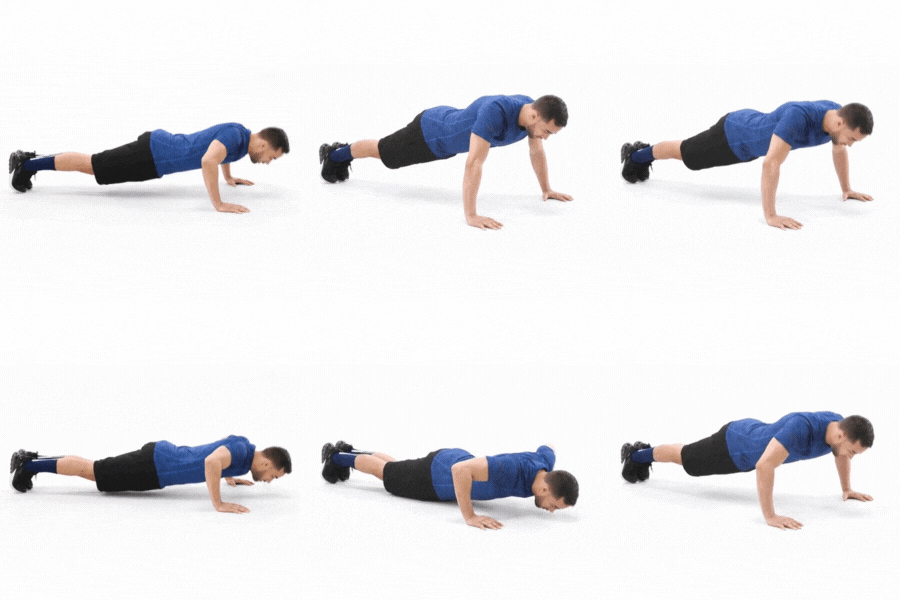
Begin with pushups, a body-weight and strength-training staple. Pushups are a great way to target your chest, arms, and abs, so drop and knock out 10 to 15 pushups!
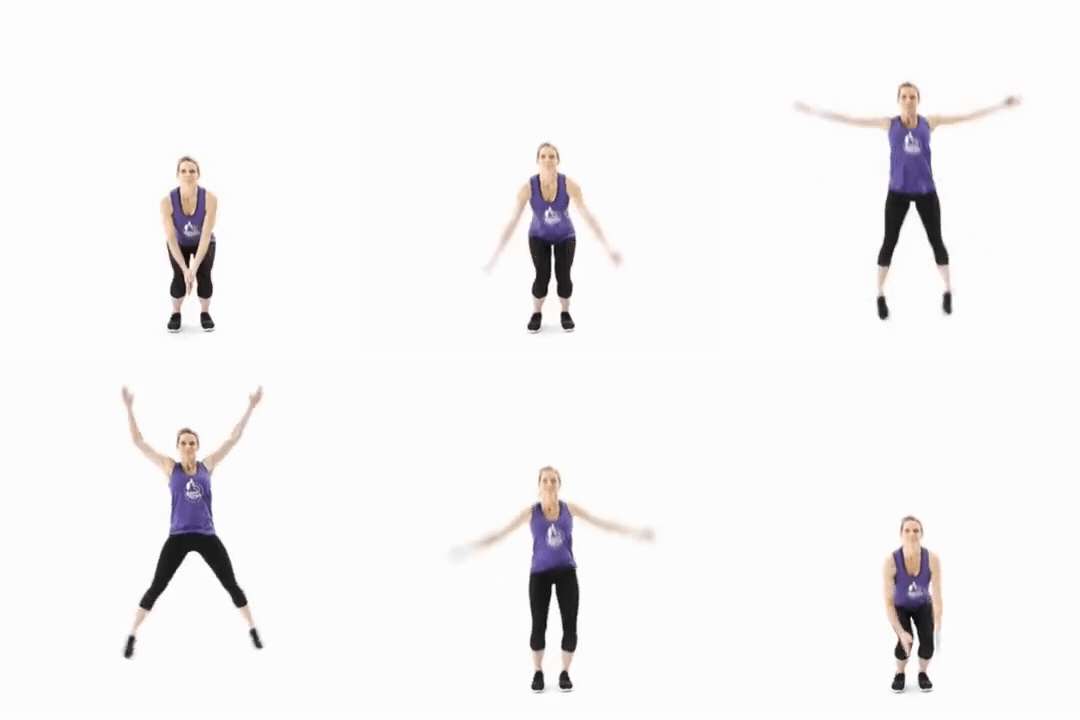
Hop up and do a few star jumps for 30 seconds.
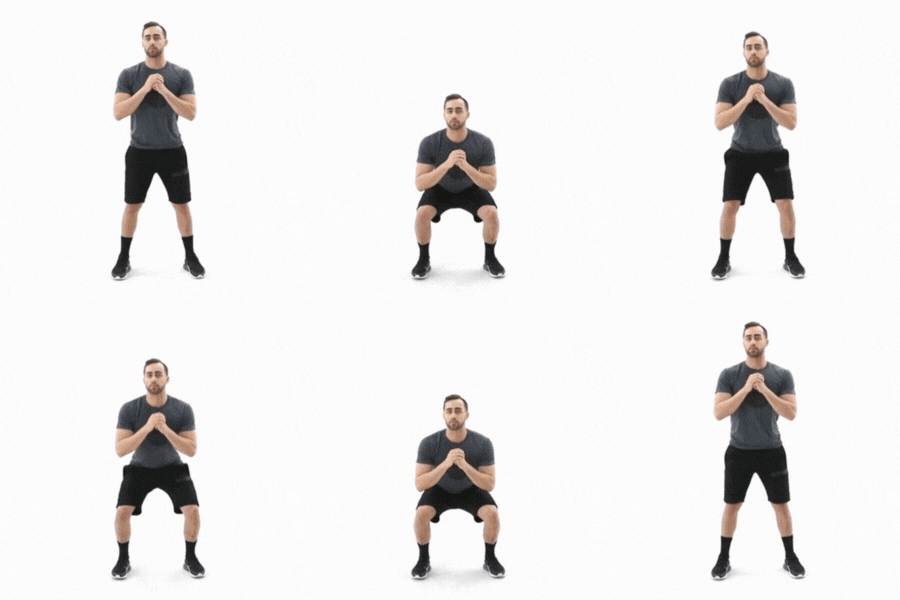
Spread your feet shoulder-width apart, perform 10 bodyweight squats, take a break for 30 seconds, and do 10 more. You should feel this in your legs, glutes, and core.
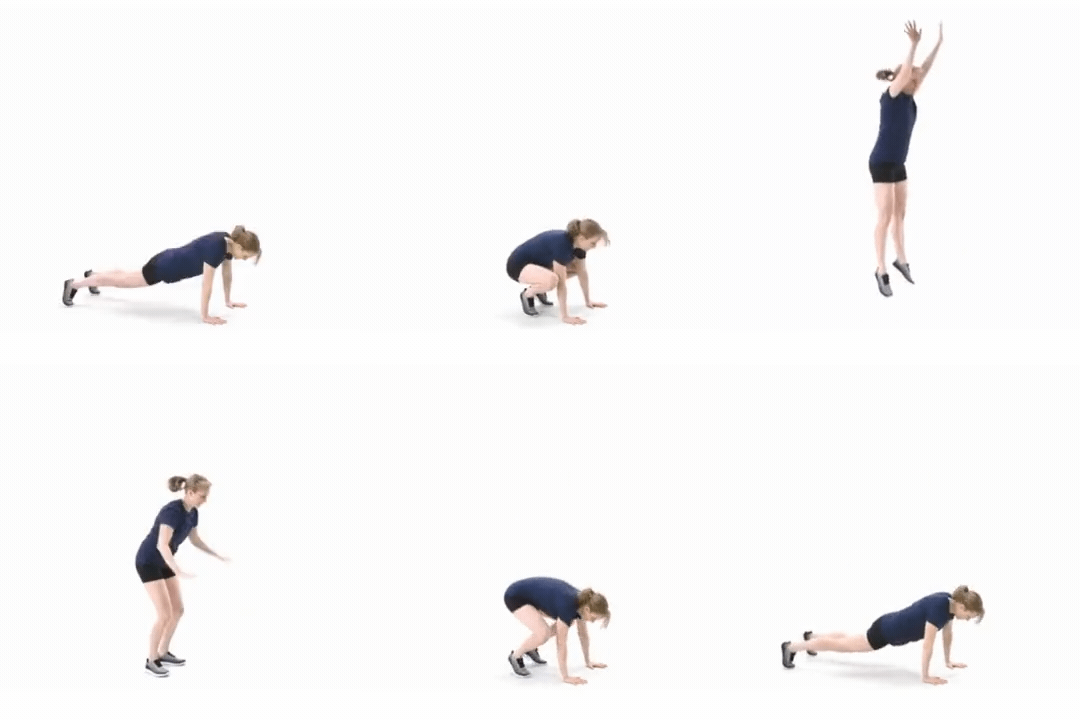
Time for some burpees! This might not be everyone's favorite exercise, but burpees are a great workout for your entire body, so aim to complete 10 reps.
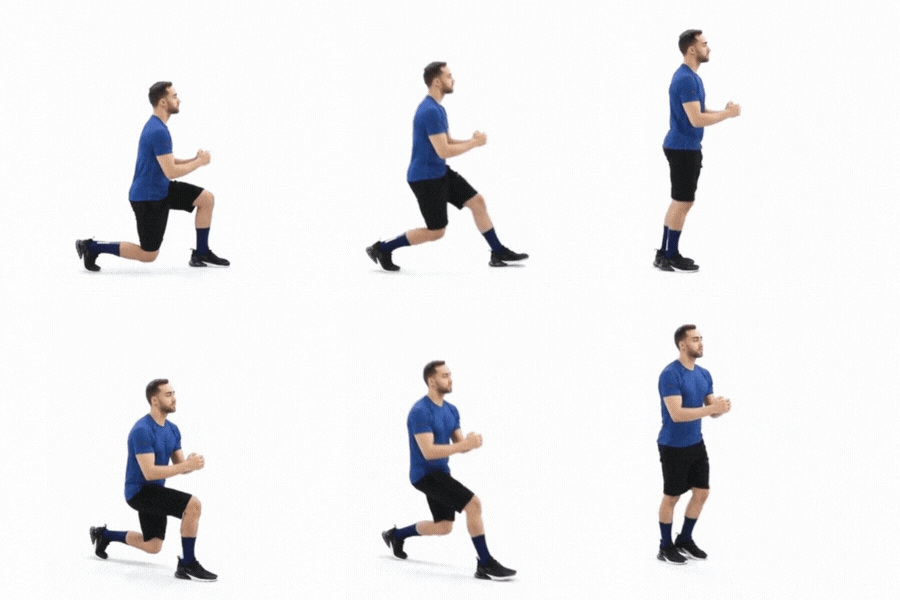
Now for some lunges—perform 10 per leg. Lunges target your hamstrings, quads, glutes, and core. For an added challenge, lunge with a pair of lightweight dumbbells.
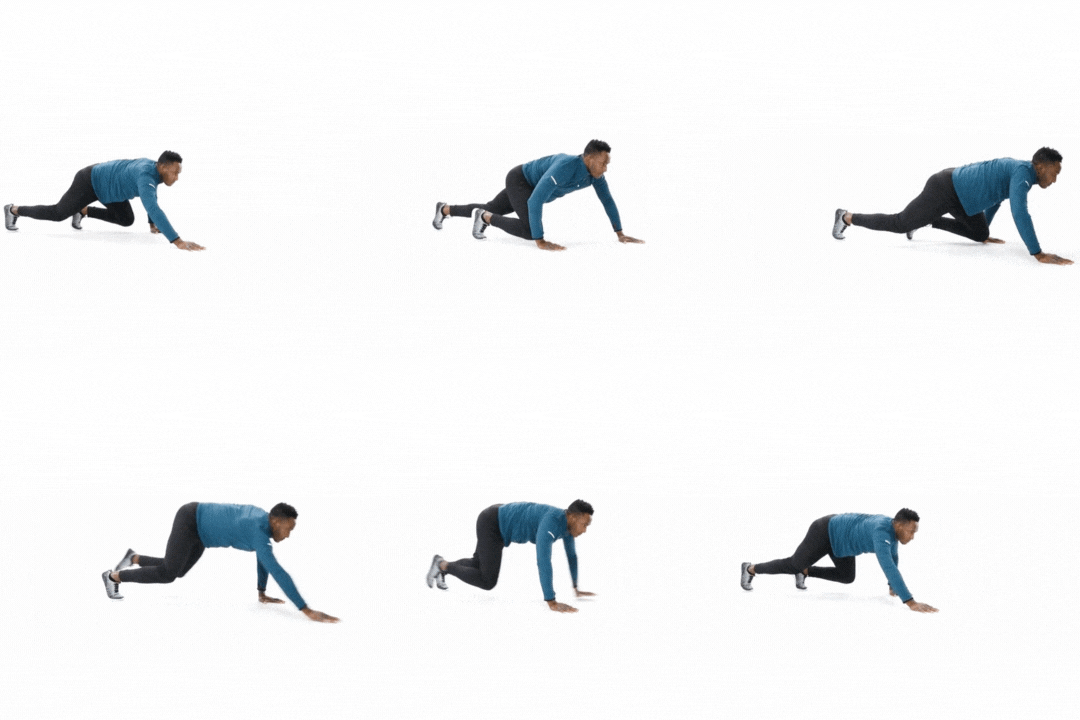
Add some bear crawls to your cardio routine to strengthen your core by working your arms and shoulders. In the pushup position, bear crawl forward for 10 seconds and then backward for 10 seconds.
Close out the routine with a plank, the ultimate ab exercise! Try to plank for 30 seconds.

COOL DOWN AND STRETCH
Your morning workout just asked a lot of your muscles! Time to reward yourself for working so hard with a relaxing cool down to conclude the final five minutes of your morning workout routine.
Start by taking a few deep breaths. Raise your arms over your head as you inhale, and drop them back down to your sides as you exhale. Now, give your muscles some well-deserved stretching.
For the upper body, start with the biceps and triceps. For the biceps, place your inverted hands against a wall with your fingers pointed toward the floor. To stretch the triceps, bend one arm behind your head and then gently press down on your elbow with your other hand.
Follow this up with some shoulder rolls and a good chest stretch. For the lower body, stretch out those hamstrings! Find a step or a wall to stretch your calves, and then lay on your side to stretch out your quads.
Afterward, congratulate yourself on a job well done! If you struggle to make time for the gym, squeezing in a 30-minute morning workout at home might be your best bet!
Plus, with the PF App on hand, you can find trainer-created morning workout routines for free to wake you up and prepare you for the day ahead.
Related Topics
Related Articles
Education & TipsWorkout Guidance
9 Best Dumbbell Tricep Exercises to Build Muscle
The biceps aren’t all that’s in the arms’ arsenal! Every well-rounded fitness routine includes tricep exercises. Just because many neglect this critical muscle in favor of the biceps doesn’t mean they don’t deserve some love, too!
Training the triceps helps with arm strength, definition, and upper-body stability. A great way to train this muscle is with classic dumbbells! The easy-to-use weights' versatility makes them great for beginners and pro-lifters alike.
Plus, the exercises in this guide are perfect whether you’re at home or your local gym, where you can find support and expert guidance if needed.
What are Triceps?
To target the triceps, you must first understand them. The triceps, or triceps brachii, are the muscles located on the back of the upper arm. The muscle is made up of three distinct “heads” called the long, lateral, and medial. So your upper arm is actually two-thirds tricep!
The triceps are crucial to movements like pushing and pressing, as well as responsible for extending the elbow joint. A variety of exercises will help build tricep strength, stabilizing the shoulder joint while reducing the risk of injury in daily activities and workouts. It’s a win-win!
Why Focus on Tricep Strength?
Developing strong triceps isn’t just about flexing those guns. The triceps are highly functional in daily activities, so training these muscles adds strength and upper-body power, enhances joint stability, and supports the rest of the body to perform better in general daily life.
Since the tricep is responsible for bending the elbow joint, any pushing or pulling motion is more accessible and less stressful on the body with stronger triceps. Strong triceps also allow for greater functional strength, translating to more manageable everyday tasks, from lifting objects overhead to pushing open heavy doors. Focusing on tricep strength will give you a stronger upper body to handle fitness and day-to-day challenges.
Best Dumbbell Tricep Exercises for Beginners
Unpack the following dumbbell exercises below that specifically target those tricky triceps. Beginners and experts alike should focus on form, technique, and gradual strength development.
1. Close-Grip Dumbbell Press
This exercise targets the triceps while engaging the chest and shoulders. It strengthens the inner triceps while defining your upper arms and chest.
Lie flat on a bench with a dumbbell in each hand.
Hold the weights close together at chest level.
Keep your palms facing each other and press the weights upwards.
Make sure your elbows stay tucked close to your body.
Pause briefly at the top and slowly lower the weights back down.
2. Dumbbell Skull Crusher
The Skull Crusher isolates the triceps. Feel the burn as your triceps are challenged through a full range of motion and grow your muscles.
Lie on a bench or floor.
Hold the dumbbells directly above you.
Lower the weights to your forehead by slowly bending your elbows.
Keep your upper arms stable–if you’re quivering, lower the weight.
When the dumbbells are at a comfortable point near your forehead, go back to starting position.
3. Dumbbell Floor Press
Since the floor press restricts the range of motion, this is an excellent exercise for beginners who still manage to target the triceps. With little shoulder engagement, your triceps are isolated, and you build functional strength.
Lie flat on the floor with a dumbbell in each hand.
Keep your elbows resting on the floor.
Press the weights straight up. Make sure your elbows are slightly tucked.
Lower the weights back down until your elbows touch the floor.
Repeat.
4. Triceps Kickback
Like the floor press, this exercise also isolates the triceps for muscle definition and endurance.
Stand with knees slightly bent and back straight.
Hold dumbbells by your sides with palms facing inward.
Hinge at the hips and extend your arms backward until fully extended.
Squeeze the triceps at the top before returning to the starting position.
5. Dumbbell Triceps Kickback (Alternative)
In any workout routine, it’s essential to include alternate methods to increase motivation and offer variety to keep life spicy. (Pssst…if you are struggling with motivation, here’s a little gymspiration.)
Plus, you can't target different areas of the muscle for further development. This kickback variation can include different grip positions (like a pronated or supinated grip) or a different stance (possibly a staggered stance or kneeling position) to add intensity and variety.
6. Dumbbell Triceps Extension
The Dumbbell Tricep Extension builds upper body balance and strength, promoting shoulder stability and core engagement. To give it a try, you’ll:
Sit or stand with a single dumbbell held overhead using both hands.
Lower the weight behind your head by bending at the elbows.
Extend your arms to return to the starting position.
7. Overhead Dumbbell Tricep Extension
Much like #5, this variation engages the core while still strengthening those triceps. First, you’ll:
Sit or stand with your core engaged.
Hold a dumbbell overhead.
Lower it behind your head.
Return to the starting position.
8. Dumbbell One-Arm Triceps Extension
Using one arm at a time, this tricep extension variation corrects any strength imbalances between arms and builds muscle in each tricep.
Hold a dumbbell in one hand with the arm extended overhead.
Lower the weight behind your head, bending only at the elbow.
Return to the starting position.
9. Lying Triceps Extension
This final exercise reduces shoulder strain, allowing for controlled isolation of the triceps. It’s especially suitable for beginners looking to build stability and strength without much shoulder involvement.
Lie on a bench with dumbbells extended toward the ceiling.
Slowly bend at the elbows to bring the weights down.
Extend back up to the starting position.
Tips for Dumbbell Tricep Training
To effectively train the triceps safely, there are certain measures necessary to maximize benefits. Remember: Anything worth doing is worth doing right!
So, keep the following in mind for worthwhile muscle training. For effective and safe tricep training, focus on controlled movements and proper form:
Form First: Prioritize correct form over heavy weights to prevent injury and maximize muscle engagement.
Start with Light Weights: Beginners should begin with lighter weights, allowing you to master the technique before progressing.
Gradual Weight Increase: Once your form is perfected, increase weights incrementally for sustainable strength gains.
Controlled Movements: Avoid using momentum; controlled, steady movements ensure your triceps work optimally.
Sample Beginner Dumbbell Tricep Workout
Incorporate 3-4 exercises into a routine to strengthen the triceps efficiently. Muscles strengthen most effectively through exercises that function together to target certain groups.
Here’s a quick beginner workout:
Close-Grip Dumbbell Press: 2-3 sets of 8-12 reps
Triceps Kickback: 2-3 sets of 10-12 reps
Dumbbell Skull Crusher: 2-3 sets of 8-12 reps
Overhead Dumbbell Tricep Extension: 2-3 sets of 10 reps
Take 30-45 seconds between each set to allow your muscles time to recover. And don’t forget to drink plenty of water!
Safety Tips for Working Triceps with Dumbbells
Big muscles are no good when you pull or strain yourself. We have your back for safe lifting!
Start with Light Weights: For beginners, starting with lighter weights is crucial to mastering proper form and avoiding unnecessary strain. Using manageable weights helps build a strong foundation while reducing the risk of injury. As you progress, gradually increase the weight to safely build muscle strength and endurance.
Maintain Proper Form: When working on tricep exercises, it’s essential to keep your elbows close to your body and avoid locking your joints, especially during extensions. Maintaining good form not only enhances muscle engagement but also prevents stress on the shoulders and elbows, reducing the chance of injury.
Control Your Movements: Rather than swinging or using momentum, focus on slow, controlled movements. This approach ensures that your triceps stay engaged throughout each repetition, minimizing the risk of strain. Controlled movements also enhance muscle isolation, leading to more effective workouts.
Warm Up and Stretch: Start with light cardio and dynamic stretching to prepare your muscles and joints for the workout. A thorough warm-up activates the triceps and surrounding muscles, improving flexibility and circulation, which helps prevent strain or injury during exercise.
Avoid Overextension: With exercises like skull crushers or overhead extensions, be mindful not to lower the weights too far. Overextending can place undue stress on the elbow and shoulder joints. Limiting the range of motion to a comfortable level helps maintain joint safety while still effectively targeting the triceps.
Listen to Your Body: Pay attention to any signs of sharp pain or discomfort, especially in your joints. Pain can indicate incorrect form or excessive weight, both of which increase the risk of injury. If you experience discomfort, stop the exercise and adjust accordingly.
Rest Between Sets: Allow for brief rest periods between sets to prevent muscle fatigue and maintain proper form. This short recovery time lets your triceps recuperate, making each set safer and more effective.
Stronger Arms, One Dumbbell at a Time
Incorporating dumbbell tricep exercises into your fitness routine is an effective way to build both muscle strength and definition. These exercises provide a strong foundation for enhancing upper body performance and stability.
By following a structured approach and mastering these fundamental exercises, beginners can build confidence, gain strength, and set the groundwork for continued progress in their fitness journey. Embrace these dumbbell tricep exercises, and you’ll be on your way to stronger, more defined arms!
Find more workout suggestions and routines for FREE on the PF App.
Education & TipsWorkout Guidance
How to Use a Plate-Loaded Bench Press: A Complete Guide
There’s a reason, or maybe a few, why the plate-loaded bench press is a staple in gyms! This machine delivers great results while being accessible to both beginners and seasoned lifters. Specifically, the plate-loaded bench press helps build muscle, increase strength, and improve posture.
Want to learn how to use the plate-loaded bench press to its fullest potential? Read on for tips and tricks to get started, as well as the benefits you can expect from a bench press workout.
Here at Planet Fitness, we’ve got your back. Find a club near you for easy and affordable access to a (plate)loaded gym experience.
What is the Plate-Loaded Bench Press?
The plate-loaded bench press is a machine built to replicate the motion of a traditional barbell bench press. It is a less complicated technique, though, making it a great choice for beginners. The plate-loaded bench press offers very controlled movement, like the Smith Machine bench press, providing additional safety. Free weights require you to stabilize the barbell, but the guided motion of the plate-loaded machine allows you to focus on working your muscles.
Key features of the plate-loaded bench press include:
Guided Motion: The plates are mounted on a set of rails, allowing for a smooth, controlled press.
Controlled Resistance: Because of its quality design, the machine ensures that resistance is evenly distributed throughout the muscles during the press. This reduces injury and improves targeted workouts.
Safety: Working out solo means you don’t always have someone to spot you during a free-weight bench press. With the plate-loaded machine, there’s less risk of the weight falling or being misaligned, making it a safer option.
How is a Plate-Loaded Bench Press different from a Plate-Loaded Chest Press?
Even though the plate-loaded bench press and plate-loaded chest press both work the upper body muscles, they each require a different motion and target different muscles.
Movement Patterns: The plate-loaded bench press has a similar form used in the free-weight bench press, requiring you to lay flat and press upwards. On the other hand, the plate-loaded chest press requires you to be sitting with a forward press.
Muscle Activation: Each exercise targets different muscles. The bench press engages muscles like the shoulders and triceps. The chest press isolates the pectoral muscles more effectively and is better for those wanting to build chest muscles and strength.
Muscle Groups Worked by the Plate-Loaded Bench Press
The plate-loaded bench press targets several important muscle groups in the upper body.
Primary Muscles
Pectoralis Major: Aka “The Pecs.” This is the primary muscle that’s getting stronger during exercise. Responsible for moving the arms forward and across the chest, working the pecs provides great functional strength for day-to-day.
Anterior Deltoids: Located toward the front of the shoulder, these muscles engage to press the weight upward—it’s the “press” part of the plate-loaded bench press.
Triceps Brachii: The back muscles of the upper arms are responsible for straightening the arms during the press in the first half of the exercise.
Secondary Muscles
Biceps: The biceps assist in stabilizing the muscles during the movement. For bench presses, it’s useful to have strong biceps so you can use the exercise to strengthen other muscles.
Forearms: Forearms grip the handles and keep the movement steady for a complete press. Used to grip the handles and stabilize the movement.
Stabilizing Muscles: More minor muscles, such as the serratus anterior, engage the shoulder blades, improving posture and form during the exercise.
Effects on the Muscles from the Plate-Loaded Bench Press
The plate-loaded bench press works your muscles hard but in a good way! After some time on this machine, you’ll likely feel a muscle pump due to increased blood flow to the chest, shoulders, and triceps. This pump-feeling is the first sign of muscle growth.
Benefits of the Plate-Loaded Bench Press
The plate-loaded bench press offers a controlled range of motion, which leads to steady—and safe—muscle development. Beginners can start light with smaller weights and gradually add weight and resistance as they build strength. Those with more experience can get technical and zero in to target specific muscle fibers for greater hypertrophy. At Planet Fitness, trainers and staff are always around to teach you how to use the machines and movements to their fullest potential.
Sitting at a desk all day hunches your shoulders and hurts your posture. Working these muscles in the plate-loaded bench press—including your chest, shoulders, and triceps—counteracts poor positioning and corrects your posture with further practice. Further, core engagement during this exercise promotes greater stability and balance. Now, all these benefits won’t pop up overnight; you’ll have to work regularly with the plate-loaded bench press over time, but the ease and versatility of this machine make that an achievable goal for almost anyone.
Components of the Plate-Loaded Bench Press Machine
The small parts of the plate-loaded bench press help to make your life easier and your workout better. Several key components make it easy to use and effective for training:
Bench: Adjustable for flat, incline, or decline positions to allow various pressing angles and muscle targets.
Handles and Grips: Different grip styles and positions (wide, narrow, neutral) target different parts of the chest and shoulders depending on how you grab it.
Weight Plates: Removable weight plates to add or lower resistance. It helps you to progress and build strength comfortably.
Safety Features: There should be no scary slip-ups with this machine! Guided rails and stoppers ensure the weights remain securely in place to reduce the risk of injury.
How to Use the Plate-Loaded Bench Press
Adjust the bench and grips: Choose a flat, incline, or decline bench angle depending on which muscles you want to target. Then, choose the appropriate grip. If you struggle to adjust or don’t know which position to use, flag down a staff member to help!
Load the weights: Place the weight plates on either side of the machine. Be sure to put the same amount of weight on both sides to distribute the weight evenly.
Find your positioning: Sit or lie down on top of the bench. Place your feet firmly on the floor for added stability and maximum core engagement.
Press the weight: Take the handles tightly and press the weight away from your chest.
Lower the weight: Now that the weight is to your maximum range of motion, slowly bend your arms and lower the weight in a slow and controlled movement.
Repeat: Perform desired reps, focusing on technique and form.
Best Plate-Loaded Bench Press Exercises
The versatility of the plate-loaded bench press can be used for many exercises, but we’ve given you a few to start you off. Of course, if you’re at Planet Fitness, trained staff can spot you, or help you discover new ways to work out!
Iso-Lateral Bench Press: Align your hand placement on the grips to parallel your chest. The independent arm movements during this movement lead to balanced muscle development, helping correct strength imbalances.
Plate-Loaded Incline Press: Adjust the bench to sit and move in the same pattern outlined above. This targets the upper chest for a fuller, more defined chest.
Decline Bench Press: Adjust the bench to be at the lowest position that is comfortable for you. Laying horizontally like this focuses on the lower portion of the pectorals.
You can also experiment with wide or narrow grips to shift emphasis between the chest and triceps.
Incorporating the Plate-Loaded Bench Press into Your Routine
While the plate-loaded bench press can be a part of any gym routine, it is important to start slow—especially if you’re a beginner! At first, use lighter weights to master the form and technique and use slow and controlled movements. This helps ensure you are targeting the correct muscles.
Once you have the basics down, start performing this exercise about 2 to 3 times weekly. The time in between gives your muscles time to recover and grow. As you familiarize yourself with the machine and get used to the weights, consider increasing the resistance. A gradual increase in weight or the number of reps continues challenging your muscles. You can safely and steadily improve your strength and muscle development by progressing gradually and focusing on technique.
Do That Bench Press!
Suitable for all fitness levels, it’s no wonder why the plate-loaded bench press is a craze at gyms. The controlled movement and customizable resistance support muscle growth, strength, and endurance like no other machine. Incorporating this exercise into your routine, emphasizing proper form and gradual progress, will significantly improve upper-body strength and muscle definition. Consistency and dedication are key—add the plate-loaded bench press to your workout to achieve your fitness goals.
Ready to hit the gym and try out the plate-loaded bench press? Find a Planet Fitness club today. Or, get started on your goals today for free on the PF App.
Workout GuidanceBeginner Tips
Best Stretches for Lower Back Pain
If you’re suffering from lower back pain-you’re not alone! Whether it’s from hunching over a desk, lifting too heavy in household chores, or clinical medical issues, lower back pain is a common complaint that can dampen our day-to-day lives.
Sometimes, relief feels impossible, but there is hope in sight! Below, we’ll explore seven simple stretches that can help ease your pain, with step-by-step instructions for beginners. We’ll also unpack the benefits of stretching for lower back pain and offer tips for getting the most out of your routine.
Don’t accept chronic back pain-embark on a fitness journey for support and expert guidance when you need it.
Why Stretching Helps Lower Back Pain
Stretching is a great way to ease discomfort and relieve tension in your body. But you’ll also find a few other amazing benefits of stretching your lower back, such as:
Increased Flexibility
Lower back pain is often caused by tight hamstring, back, and hip muscles. By stretching, these muscles are loosened, reducing tension and discomfort in your back. Research shows that consistent lower back stretches significantly reduce lower back pain.
Better Range of Motion
Even gentle stretching and light movement can help improve mobility, making daily tasks easier. Daily stressors on your body can be improved through daily stretching and increasing the range of motion.
Enhanced Blood Flow and Healing
Stretching improves blood circulation. With increased blood flow, more nutrients can reach the parts of your body you need. This can reduce inflammation and tightness in the lower back and speed up the healing process.
How to Safely Stretch for Lower Back Pain Relief
Stretching is meant to be a remedy for pain, not a cause. We care about your safety. Here are some essential tips to stretch safely for lower back pain:
Warm Up Before Stretching
Partaking in light aerobic activity, like walking or cycling for five minutes, prepares your muscles for back stretches. This helps prevent injury as the movement loosens your muscles and increases your heart rate.
Listen to Your Body
Pay attention to how your body feels and moves during lower back stretches. Stop immediately if there’s sharp or persistent pain during a movement. Stretching should only relieve tension, not create it.
Use Proper Form and Technique
To avoid injury, use good posture by maintaining a neutral spine and proper alignment during each stretch for lower back pain. In centering yourself this way, you will have a deep stretch without hurting your muscles or joints.
Beginner-Friendly Lower Back Stretches: Step-by-Step Instructions
These beginner back stretches are perfect for everyone—from beginners to lifelong gym buffs. Follow these step-by-step instructions to help aid lower back pain.
1. Child’s Pose
This lower back stretch elongates the spine and relieves tension in the lower back.
Kneel on the floor and sit back on your heels, extending your arms forward.
Place your forehead on the floor.
Relax and breathe deeply.
Hold for 20-30 seconds.
2. Cat-Cow Stretch
Cat-Cow improves spinal flexibility, which alleviates muscle stiffness.
Start on all fours.
Switch between arching your spine (cow) and rounding it (cat).
Cat pose should look like a startled, arched-back Halloween cat
Repeat slowly 8-10 times.
3. Knees-to-Chest Stretch
An easy stretch—just lie down and hug yourself!
Lie on your back with your knees bent.
Bring one or both knees to your chest.
Hold for 20-30 seconds and relax.
Repeat 2-3 times.
4. Seated Hamstring Stretch
Hamstrings and lower back pain are often related. Stretching your hamstrings removes pressure from your lower back.
Sit with your legs long in front of you.
Reach for your toes, keeping your spine straight.
Hold for 20-30 seconds.
5. Figure Four Stretch
Figure Four targets the hips and stretches the lower back muscles to loosen your muscles and increase flexibility.
Lie on your back.
Cross your right ankle over your left knee.
Pull the left leg toward your chest.
Hold for 20-30 seconds, then switch sides.
6. Pelvic Tilts
A slightly more dynamic stretch that strengthens your lower back and core while soothing pain.
Lie on your back with your knees bent.
Tilt your pelvis upward.
This should naturally flatten your lower back against the floor.
Tighten your core and hold for a few seconds, then relax.
Do 10-12 slow repetitions.
7. Standing Forward Bend
Like the seated hamstring stretch, this movement releases tension in your lower back and hamstrings.
Keep your feet hip-width apart.
Slowly bend towards your toes.
Hold for 20-30 seconds.
Quick Tips for Getting the Most Out of Your Back Stretches
Warm up before stretching. Light activity helps loosen your muscles and prepare for lower back stretches.
Hold each stretch for 20-30 seconds. Avoid bouncing or jerking movements, as they can lead to injury. Steadily, holding a stretch deeply works the muscles.
Listen to your body. Don’t push through the pain. If a stretch hurts, stop, rest, and modify as your body requires.
Seeking Professional Help for Lower Back Pain
Numerous experts agree on the incredible benefits of stretching. While stretching can be helpful, it may not solve persistent lower back pain. If lower back pain lasts for weeks on end, it is time to seek medical advice.
Stretch Safely at Planet Fitness
Incorporating regular lower back stretches into your daily routine can improve the frustration caused by lower back pain, relieve uncomfortable symptoms, and increase mobility. Back stretches abound with benefits—increased flexibility for muscle relief, enhanced blood flow for expedited healing, and a better range of motion. In fact, they’re likely to be the first thing your doctor recommends!
Every Planet Fitness club features a dedicated stretching area, giving you the space to work through each of these moves with proper form, away from the equipment and at your own pace. It's part of our Judgement-Free Zone, designed so you feel comfortable taking the time your body needs.
Not able to make it into the club, or want to build a routine before you go? The PF App offers guided mobility videos you can follow along with anytime, anywhere, making it easy to stay consistent with your stretching even on the go.
For more stretches and fitness tips, keep poking around our blog—or get started on the go for free with the PF App.